
Balance, Concussion & Neurological

Vestibular Therapy

Evidence-based treatment for dizziness, vertigo, and balance disorders
Best For

Vertigo, dizziness, concussion recovery, and balance disorders

Session

30-55 minutes

Typical Course

3-8 sessions

Coverage

Extended health benefits (physiotherapy)

What Is Vestibular Therapy?

Vestibular therapy is a specialized form of physiotherapy that targets conditions affecting the inner ear and balance system. Your vestibular system works closely with your visual system and proprioceptors to help you maintain balance, spatial orientation, and coordinated movement.

This evidence-based treatment approach addresses dizziness, vertigo, and post-concussion symptoms through carefully designed rehabilitation protocols. Rather than relying on medication to mask symptoms, vestibular therapy:

  • Targets the root cause of your balance dysfunction
  • Helps your brain adapt and compensate for inner ear deficits
  • Uses customized exercises to improve gaze stability and reduce motion sensitivity

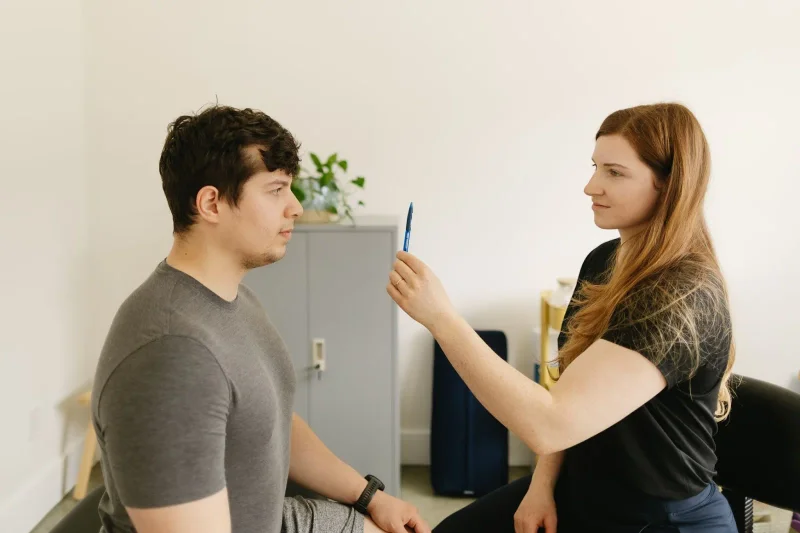
Every vestibular rehabilitation program begins with a detailed oculomotor assessment. This comprehensive evaluation examines the relationship between your eye movements and inner ear function, identifying specific areas of dysfunction.

At At Ease Physio in South Surrey, our therapists have completed specialized training in vestibular rehabilitation, combining the latest research with hands-on clinical experience.

For a deeper understanding of how vestibular therapy works, read our guide on understanding vestibular physiotherapy. If you’re experiencing positional vertigo, learn about BPPV and its treatment. For those recovering from head injuries, our article on common concussion misconceptions may help clarify your recovery path.

How It Helps

Vertigo Reduction

Repositioning maneuvers and habituation exercises decrease the frequency and intensity of vertigo episodes

Balance Improvement

Strengthens integration between vestibular, visual, and proprioceptive systems for stable movement

Gaze Stabilization

Specialized eye movement exercises help maintain clear vision during head movement

Concussion Recovery

Structured rehabilitation accelerates recovery and safe return to work, school, and sport

Motion Sickness Relief

Gradual exposure protocols desensitize your vestibular system to provocative movements

Fall Prevention

Improved balance control significantly reduces your risk of falls

Conditions We Treat

BPPV (Benign Paroxysmal Positional Vertigo) Concussion and Post-Concussion Syndrome Vestibular Neuritis Meniere's Disease Balance Disorders Motion Sensitivity Dizziness of Unknown Cause

What to Expect

1

Assessment

Comprehensive oculomotor testing examines how your eyes coordinate with your vestibular system, plus balance evaluation through various standing and walking tasks.

2

Treatment

Specialized repositioning maneuvers for BPPV, habituation exercises for motion sensitivity, and progressive balance training tailored to your diagnosis.

3

Home Program

Customized daily exercises (10-20 minutes) with clear progressions. Regular follow-ups to monitor progress and adjust your program.

Who Is This For?

This treatment may be right for you if you:

Experience dizziness or vertigo — whether constant or episodic, mild or severe
Are recovering from a concussion with persistent dizziness, balance problems, or visual disturbances
Have difficulty walking on uneven surfaces, feel unsteady in crowds, or need to hold onto walls and furniture
Experience motion sensitivity from car rides, scrolling on your phone, or watching action movies

Why Choose At Ease Physio?

Specialized Vestibular Training

Our therapists have completed advanced education in vestibular assessment and rehabilitation, ensuring specialized care for complex conditions.

Comprehensive Oculomotor Assessment

We evaluate the intricate relationship between your eyes and inner ear, identifying subtle dysfunctions that might be missed elsewhere.

Integrated Approach

We combine vestibular rehabilitation with craniosacral therapy and applied neurology to address multiple contributing factors.

Evidence-Based Protocols

Treatment approaches grounded in current research and clinical best practices, continuously updated to reflect advances in vestibular science.

Frequently Asked Questions

Recovery timelines vary by condition. BPPV often improves dramatically within one to three sessions. Other vestibular conditions typically require four to eight weeks of consistent rehabilitation, though you may notice improvements within the first few weeks.
Some vestibular exercises are designed to provoke mild symptoms as part of the habituation process. This controlled exposure is necessary for your brain to adapt. Your therapist will carefully grade exercise intensity to ensure symptoms remain manageable and subside quickly after exercise.
BPPV (Benign Paroxysmal Positional Vertigo) occurs when tiny calcium crystals in your inner ear become dislodged and float into the semicircular canals. Treatment involves specific repositioning maneuvers that guide these crystals back to their proper location, often providing immediate and lasting relief.
Many vestibular conditions can be fully resolved with appropriate treatment. BPPV has an excellent cure rate with repositioning maneuvers. Other conditions may involve permanent changes, but rehabilitation helps your brain compensate effectively, often eliminating symptoms entirely.
Vestibular therapy is provided by registered physiotherapists and is covered under most extended health benefit plans that include physiotherapy coverage. We provide detailed receipts for insurance submission, and many plans offer direct billing options.

Tired of Feeling Off-Balance?

Dizziness and vertigo don't have to control your life. Book an assessment to discover what's causing your symptoms and how we can help.